9 Easy Ways How to Harvest Sweet Corn
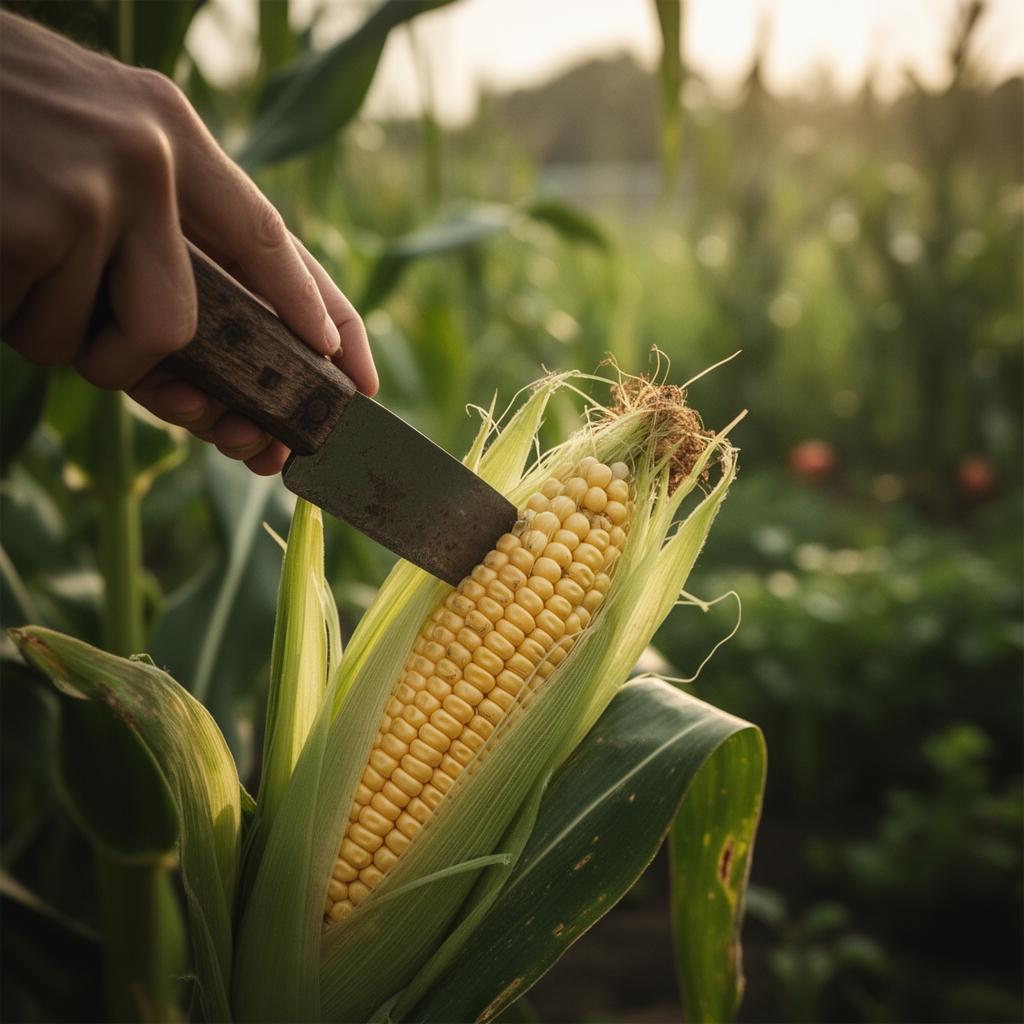
Sweet corn harvested at its peak delivers a sugar-to-starch ratio that degrades within hours of picking. Learning how to harvest sweet corn correctly preserves those sugars and captures the plant's full flavor potential. The silk tips darken first, then the kernels transition from watery to milky when pressed. Each ear signals its own readiness through measurable physiological markers, not calendar dates.
Materials and Soil Preparation

Sweet corn requires well-draining soil with a pH between 6.0 and 6.8. A balanced organic fertilizer rated 4-4-4 or 5-5-5 provides adequate nitrogen, phosphorus, and potassium during establishment. Amend heavy clay soils with composted leaf mold to improve cation exchange capacity. Side-dress with blood meal (12-0-0) when plants reach knee height to support tasseling. Bone meal (3-15-0) applied at planting depth encourages strong root development. Avoid high-nitrogen synthetics after tasseling, as excess vegetative growth diverts auxin away from kernel filling.
Timing by Hardiness Zone
In USDA Zones 3-5, direct-sow sweet corn two weeks after the last spring frost when soil temperature reaches 60°F. Zones 6-7 can plant as early as mid-April. Zones 8-10 benefit from succession planting every two weeks through early summer. Sweet corn requires 60 to 100 days from germination to harvest depending on variety. Early-season cultivars mature in 60-70 days. Mid-season types need 75-85 days. Late-season varieties demand 90-100 days. Silking occurs approximately 55-65 days after emergence. Peak harvest begins 18-24 days post-silking when kernel moisture content reaches 70-73 percent.
Growth Phases and Techniques

Sowing: Plant seeds 1 inch deep in blocks of at least four rows to ensure adequate wind pollination. Space seeds 8-12 inches apart within rows set 24-30 inches apart. Block planting increases kernel set by 30-40 percent compared to single-row configurations. Corn pollen remains viable for only 24 hours, making dense planting essential.
Pro-Tip: Inoculate seeds with Glomus intraradices or other mycorrhizal fungi to expand phosphorus uptake by 200-300 percent in low-fertility soils.
Transplanting: Sweet corn tolerates transplanting poorly due to sensitive radicle development. If starting indoors, use soil blocks or deep cells to avoid root disturbance. Transplant at the two- to three-leaf stage before the taproot exceeds 4 inches. Harden off seedlings over seven days to prevent shock.
Pro-Tip: Drench transplant holes with a kelp solution (0-0-1 with micronutrients) to stimulate auxin production and reduce transplant lag by 3-5 days.
Establishing: Thin seedlings to final spacing when they reach 4-6 inches tall. Remove the weakest plants by cutting at soil level rather than pulling to avoid disturbing neighboring roots. Apply 2-3 inches of straw mulch around plants to suppress weeds and stabilize soil moisture. Corn enters rapid growth phase at the V6 stage (six fully expanded leaves), demanding consistent moisture and nitrogen.
Pro-Tip: Scout for European corn borer egg masses on leaf undersides at the V8-V10 stage. Apply Bacillus thuringiensis var. kurstaki at a rate of 1 tablespoon per gallon when 10 percent of plants show eggs.
Troubleshooting Common Disorders
Symptom: Incomplete kernel rows or gaps near the ear tip.
Solution: Poor pollination caused by hot, dry winds during silk emergence. Plant in blocks, not rows. Water deeply during tasseling to keep silks receptive for 5-7 days.
Symptom: Ears with undeveloped, shriveled kernels.
Solution: Corn earworm feeding or inadequate fertilization during grain fill. Hand-pick larvae daily. Side-dress with compost tea (diluted 1:5) at the blister stage.
Symptom: Stalks lodge (fall over) before harvest.
Solution: Shallow root development or stalk rot pathogens. Hill soil around stalk bases at the V8 stage. Avoid excess nitrogen late in the season.
Symptom: Silks turn brown but kernels remain watery.
Solution: Premature silk desiccation. Check kernel development by puncturing a kernel with a thumbnail. Harvest only when milky sap appears.
Symptom: Kernels too firm and starchy.
Solution: Delayed harvest past peak maturity. Sweet corn converts sugar to starch rapidly after the milk stage. Harvest within a 3-5 day window for optimal sweetness.
Maintenance and Watering Protocol
Provide 1 to 1.5 inches of water per week from emergence through grain fill. Use drip irrigation or soaker hoses to deliver moisture at soil level and prevent foliar diseases. Increase to 2 inches per week during tasseling and silking. Monitor soil moisture at 4-6 inch depth. Allow slight surface drying between irrigations to encourage deep rooting. Avoid overhead watering after silks emerge, as excess moisture promotes fungal growth and reduces pollination efficiency.
Frequently Asked Questions
When is sweet corn ready to harvest?
Harvest 18-24 days after silks first appear. Silks turn dark brown, husks remain green, and kernels release milky fluid when punctured.
What time of day should I harvest sweet corn?
Early morning before temperatures rise above 70°F. Sugar-to-starch conversion accelerates in heat. Cool ears immediately in a refrigerator or ice water.
How do I know if corn is overripe?
Kernels become doughy, then dented and firm. The milky sap thickens to paste consistency. Overripe corn loses 50 percent of its sugars.
Can I harvest corn over several weeks?
Yes. Succession planting or varieties with staggered maturity extend harvest. Each planting provides a 5-7 day picking window.
How do I store freshly harvested sweet corn?
Leave husks on and refrigerate immediately at 32-35°F. Consume within 48 hours. Blanch and freeze for long-term storage within 6 hours of harvest.